Filters: |

Using the Filter |
Yellow Horned Poppy Glaucium flavum |
|||||||||||||||||||||||||||||||||||||||||
|
|||||||||||||||||||||||||||||||||||||||||
 © 2020-2025 Adrian Briggs |
|||||||||||||||||||||||||||||||||||||||||
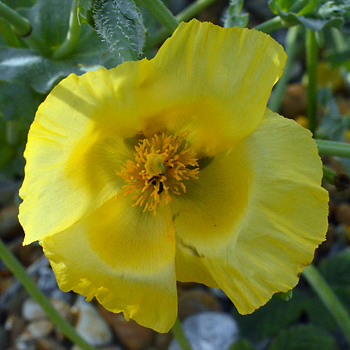
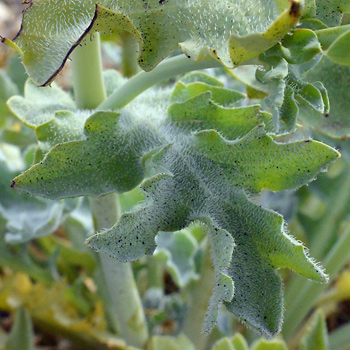
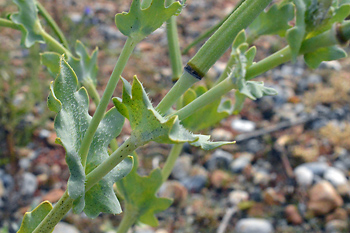
Yellow Horned Poppy is a native perennial plant of the UK, typically found growing in shingle beaches and rocky coastal areas, to a mature height of up to 90cm. Yellow Horned Poppy is named after the colour of its flowers and the horn-like appearance of its long curved seed pods. It is a bluish-green clump-forming plant, growing from a rosette of hairy, crinkly, lobed leaves. The plant becomes less hairy as it matures. Botanic classification and naming: Yellow Horned Poppy is a member of the Poppy (Papaveraceae) family. The genus name 'Glaucium' identifies the plant as a Horned Poppy and its species name 'flavum' means 'yellow'. Concerns: All parts of the Yellow Horned Poppy including the seeds are highly toxic, affecting the nervous and respiratory systems. It can cause brain damage and death. |
|||||||||||||||||||||||||||||||||||||||||
|