Filters: |

Using the Filter |
White Melilot Melilotus albus |
||||||||||||||||||||||||||||||||||||||
|
||||||||||||||||||||||||||||||||||||||
 © 2020-2025 Adrian Briggs |
||||||||||||||||||||||||||||||||||||||
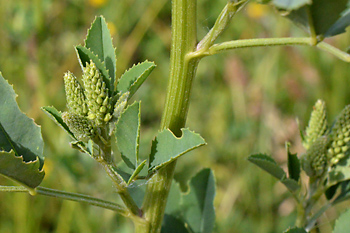
White Melilot is a non-native biennial plant of the UK, typically found growing in waste ground and roadsides, to a mature height of up to 150cm. White Melilot, a plant native to Eurasia, was introduced into the UK in the nineteenth century. White Melilot has traditionally been grown as a fodder plant. The name 'Melilot' means 'honey clover' and this refers to the sweet smell of the plant's nectar-rich flowers. White Melilot is very similar to Yellow Melilot but is distinguished by its white flowers. Botanic classification and naming: White Melilot is a member of the Pea (Fabaceae) family. The genus name 'Melilotus' identifies the plant as a Sweet-Clover and its species name 'albus' means 'white'.
Benefits: White Melilot produces a large volume of nectar to attract pollinators. It also has root nodules that host nitrogen-fixing bacteria. These make atmospheric nitrogen available to feed the plant and enrich the soil.
|
||||||||||||||||||||||||||||||||||||||
|