Filters: |

Using the Filter |
Common Hedge Mustard Sisymbrium officinale |
|||||||||||||||||||||||||||||||||||||||||
|
|||||||||||||||||||||||||||||||||||||||||
 © 2020-2025 Adrian Briggs |
|||||||||||||||||||||||||||||||||||||||||
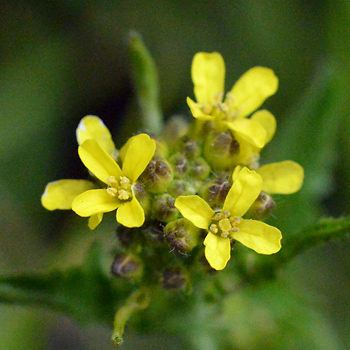
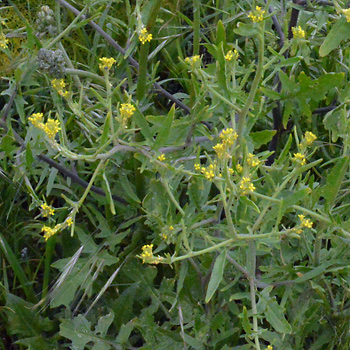
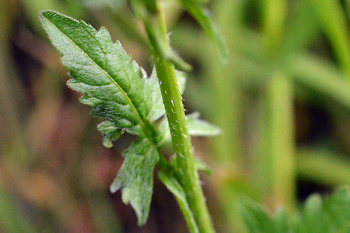
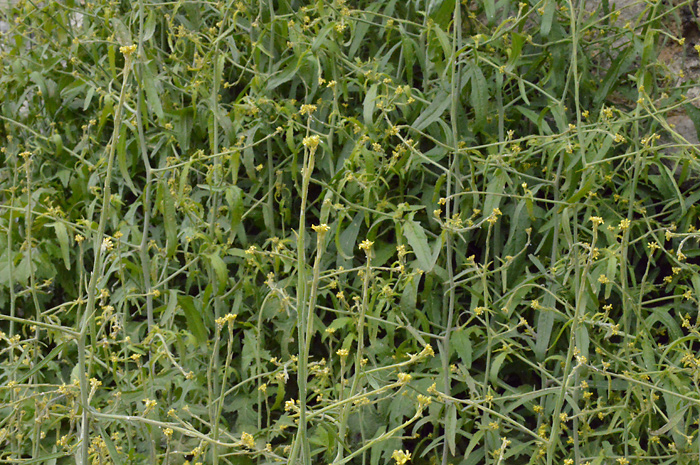
Common Hedge Mustard is a non-native annual plant of the UK, typically found growing in cropland and waste ground, to a mature height of up to 100cm. Common Hedge Mustard is native to Europe and North Africa and was introduced into the UK before the sixteenth century. It has stiff hairy vertical stems and multiple branches at right-angles to the main stem. Its tiny flowers sprout up in small clusters at the end of these sparsely-leaved branches, giving the plant a 'candelabra-like' appearance. Most of the plant's leaves are near the base and are deeply lobed. Common Hedge Mustard is frequently found growing in dense stands on waste ground. Botanic classification and naming: Common Hedge Mustard is a member of the Cabbage (Brassicaceae) family. The genus name 'Sisymbrium' identifies the plant as a Hedge Mustard and its species name 'officinale' means 'herbal medicinal plant'.
Benefits: Caterpillars of the Orange-Tip, Small White and Green-Veined White butterfly feed on this plant.
|
|||||||||||||||||||||||||||||||||||||||||
|